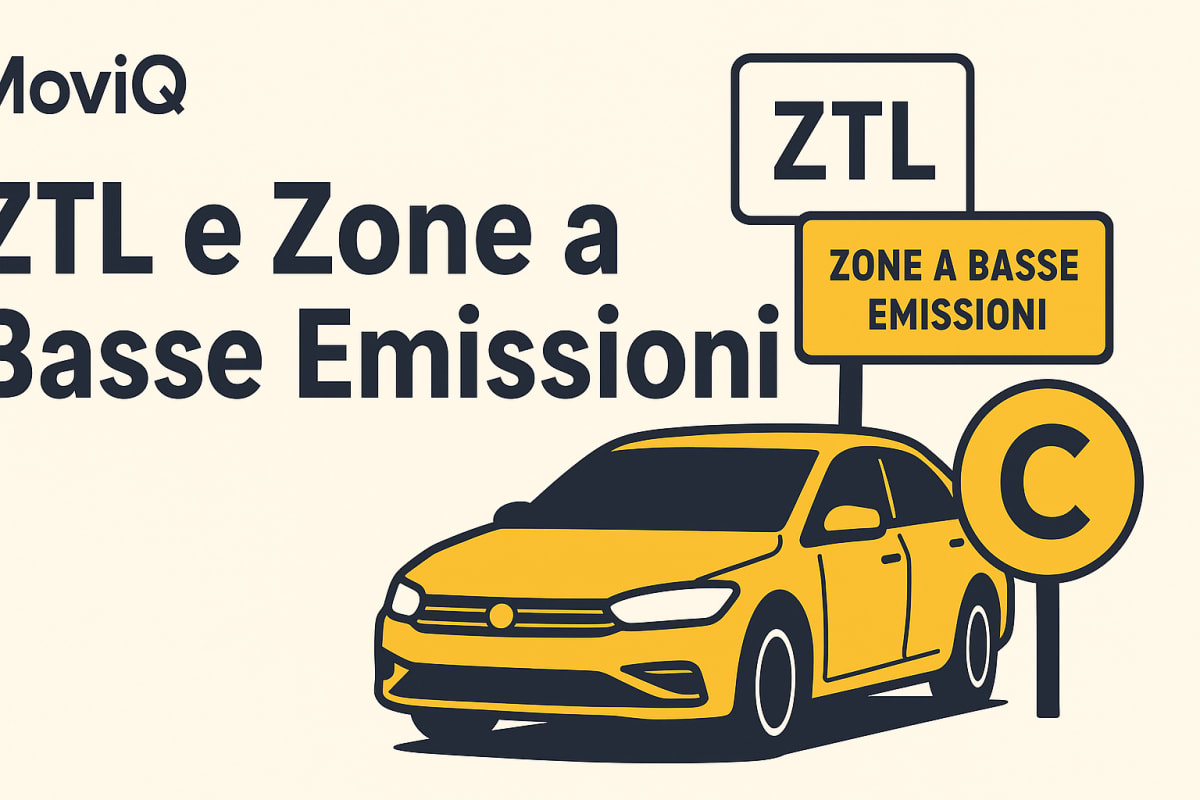
What ZTLs and low-emission zones are
Anyone who drives in the city knows how complicated it can be to navigate signs, electronic gates and rules that change from one municipality to another. Limited Traffic Zones (ZTL) have existed for decades in Italian historic centres, but in recent years they've been joined by a new tool: low-emission zones, also known as Low Emission Zones (LEZ). These areas don't just exclude general traffic, but select the vehicles allowed based on their environmental class, penalising older, more polluting engines.
The difference matters: a classic ZTL can be crossed with a permit or at certain times, regardless of the vehicle type. A low-emission zone, on the other hand, sets precise thresholds on CO₂ emissions or the vehicle's Euro standard. Exceeding these thresholds means you can't enter, full stop. Understanding this distinction is the first step to avoiding hefty fines.
The main Italian cities involved
The phenomenon affects almost all the big Italian cities, but with very different rules and perimeters. Here's an overview of the most relevant situations:
Milan is by far the most restrictive city: Area B covers almost the entire municipal territory and bans access to older diesel vehicles, with a calendar of progressive tightening already planned up to 2030.
Rome has one of the most extensive historic ZTLs in Italy, with active gates in the centre and in some peripheral areas; the shift towards emission criteria is underway but still partial.
Turin applies seasonal traffic bans linked to air quality, with restrictions kicking in during the winter months for diesel vehicles up to Euro 5 at peak hours.
Bologna manages its historic centre with a ZTL active on weekdays and is expanding pedestrian and cycling areas as part of a broader sustainable mobility plan.
Florence combines the historic centre ZTL — among the strictest for tourists — with further restrictions linked to air quality during critical periods.
Naples has a ZTL in the UNESCO World Heritage historic centre and is progressively updating its control systems with more widespread cameras.
How to find out if your vehicle can enter
Before any trip to a city you don't know well, it's essential to check two things: the perimeter of the restricted zone and the Euro class of the vehicle you're using. The Euro class is found on the vehicle registration document, in the section on emissions. Generally speaking, Euro 6 petrol or hybrid vehicles are allowed almost everywhere, while Euro 4 diesels or below face growing restrictions.
The institutional websites of individual municipalities are the most reliable source for up-to-date times, perimeters and exemptions. For Milan, for example, the City's portal publishes the updated maps of Area B and Area C. There are also dedicated apps that aggregate information on Italian ZTLs, useful especially for those who travel often between different cities.
Renting a car to get around the city: the practical advantages
If you visit an Italian city for work or tourism, choosing a rental car can prove a smart move precisely in relation to ZTLs. The vehicles in rental fleets are generally recent and meet the higher Euro standards, which makes them compatible with low-emission zones. What's more, short-term rental lets you choose the vehicle category best suited to the destination: a compact or hybrid car for the city centre, an SUV only if it's really needed for out-of-town routes.
On MoviQ you can compare the offers of local independent rental companies, paying the company directly with no hidden fees. This also means being able to talk directly with someone who knows the city and can give you practical pointers on parking, gates and alternative routes. If you're planning a stay in Milan, you can take a look at availability on car rental in Milan, or explore the options for car rental in Florence if your itinerary includes Tuscany.
Practical tips to avoid fines
Penalties for unauthorised entry into a ZTL or low-emission zone can be significant, and they arrive by post even weeks after the trip. Here are some good habits to adopt:
Always check the destination municipality's website for updated times and perimeters before setting off, since the rules change frequently.
Check the Euro class of the vehicle you use, whether your own or rented, by consulting the registration document.
If you're a tourist and need to reach your hotel inside a ZTL, contact the property: managers can often register your plate for a temporary exemption.
Prefer hybrid or electric vehicles when available: besides being allowed in the most restrictive areas, they often bring additional benefits such as free parking in some zones.
Use park-and-ride lots outside the centre and complete the journey with public transport or micromobility: in many cities it's the quickest and least stressful solution.
The future of urban mobility in Italy
The trend is clear: low-emission zones will expand and become more selective in the coming years, driven both by European directives and local air-quality goals. Cities like Milan have already announced further restrictions on diesel vehicles by 2025, and other urban areas are studying similar models. Those who travel often for work or tourism would do well to update their habits now, before the rules become even stricter.
Choosing a suitable vehicle — perhaps through rental, which gives you flexibility without the burden of ownership — is already today one of the most practical answers to this change. If you want to explore the options available in your next destination, search for a car on MoviQ and compare the offers of local rental companies directly.